



Contextual AI-Curated RAN Datasets Drive Automation and Better Business Results
NETSCOUT’s AI-curated solution delivers high fidelity, contextual RAN intelligence that enables mobile operators to scale automation, improve subscriber experience, and maximize spectrum and infrastructure investments across 4G and 5G networks.
Powered by the Omnis Sensor RAN and Omnis Streamer RAN, the solution continuously collects, curates, and normalizes multi-vendor RAN control plane data into datasets for AI model use. These datasets preserve complete RAN context—subscriber, location, mobility, and causality—providing the trusted ground truth required for advanced analytics, AI/ML-driven optimization, and closed loop automation throughout the 5G lifecycle.
Unlock Smarter Decisions with AI-Curated RAN Data
Think RAN Forward with Automated Analytics and Optimization Capabilities
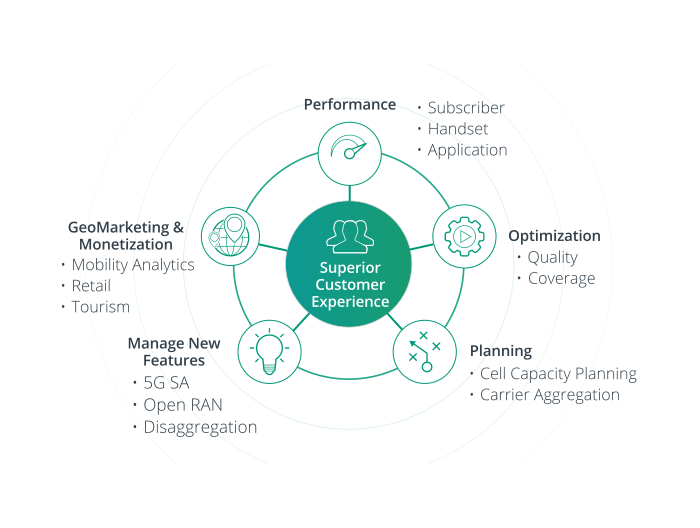
With manual tuning of capacity, interference, and coverage objectives increasingly cost prohibitive, new, comprehensive workflows that can analyze information quickly and confidently guide next actions are needed. NETSCOUT’s Omnis RAN solutions meets this objective to enable informed 5G RAN evolution.
Offering carrier service providers with a customizable and holistic approach for network growth, business transformation and profitability, the Omnis RAN solution features unique AI-curated datasets aligned with specific 5G RAN deployment challenges.
Omnis Sensor RAN Ensures Integrity and Availability
For deployment with or without NETSCOUT’s InfiniStreamNG® RAN instrumentation, Omnis Sensor RAN and Omnis Sensor Adaptor RAN enable continuous, 24x7 real-time collection of and decoding of every control plane message in the network from multi-vendor 4G and 5G element traceports.
Omnis Streamer RAN Delivers Better Data for Better Results
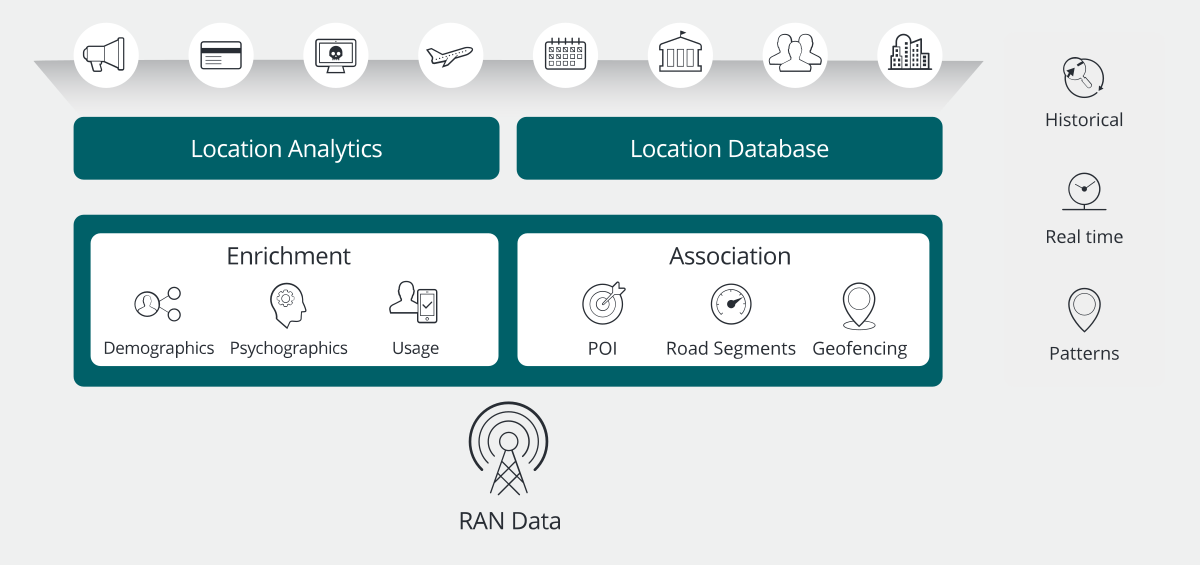
In complement to Omnis Sensor RAN data collection and correlation capabilities, NETSCOUT’s Omnis Streamer RAN is used to organize and enhance this high-fidelity, packet-derived metadata for tailored use with downstream systems, applications and existing processes for a variety of use cases. Through an advanced, domain-aware curation process, datasets are transformed into powerful insights for accelerated and precise decision-making at all levels of the organization.
AI-Curated RAN Data for Autonomous Agentic AI Ecosystems
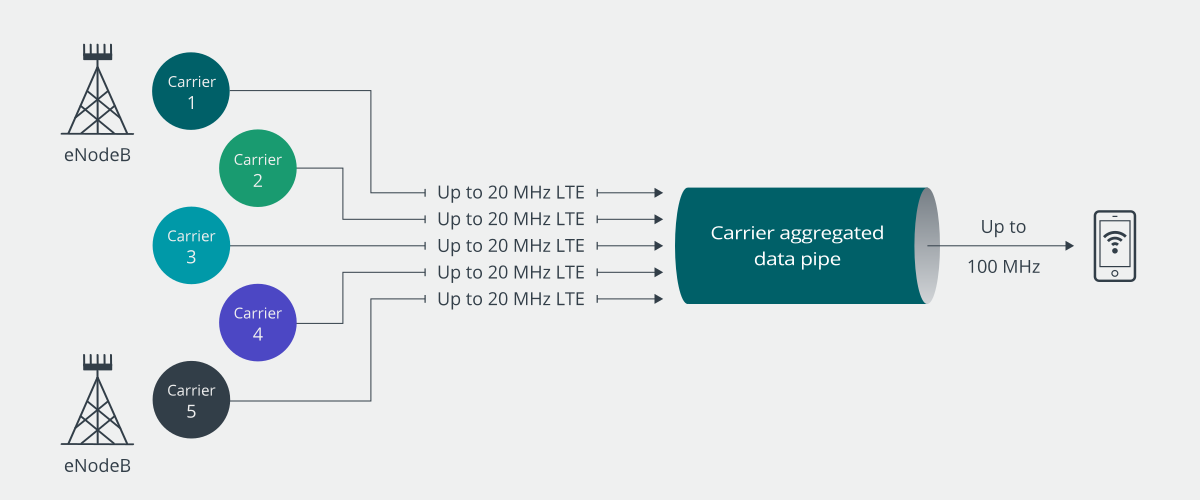
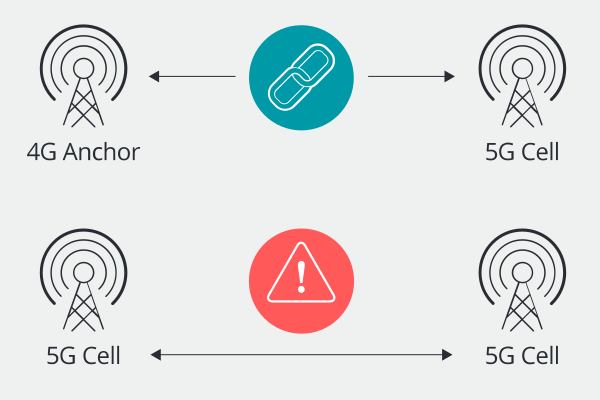
NETSCOUT’s AI-curated RAN data supports immediate integration into RAN planning and operation organizations with use cases and workflows addressing key areas of impact including capacity, mobility, service quality and subscriber experience. Alternatively RAN data may be made available to third-party data lakes and databases through an industry-standard KAFKA export or enable APIs in MCP server environments.
Resources
12 Essential Use Cases When Assuring Exceptional User Experience with 5G
Empower Operations Teams with RAN enabled Solutions
Real-time RAN data drives new technologies, improves network performance, and optimizes customer experience.
Related Pages
Information Drives New Technology Introductions and Improves Performance
Prioritize Mobile Subscriber Experience with Scalable Radio Access Network Monitoring
Remove the Guesswork from RAN Planning with Calibrated Propagation Models
Powerful Visibility into End-to-End Call Flows Accelerates Resolution of Subscriber Trouble Tickets
Assure Performance and User Experience with Enhanced Observability

Contact NETSCOUT Today
To learn more about how NETSCOUT can help your company, speak to one of our highly experienced subject matter experts.